Literature
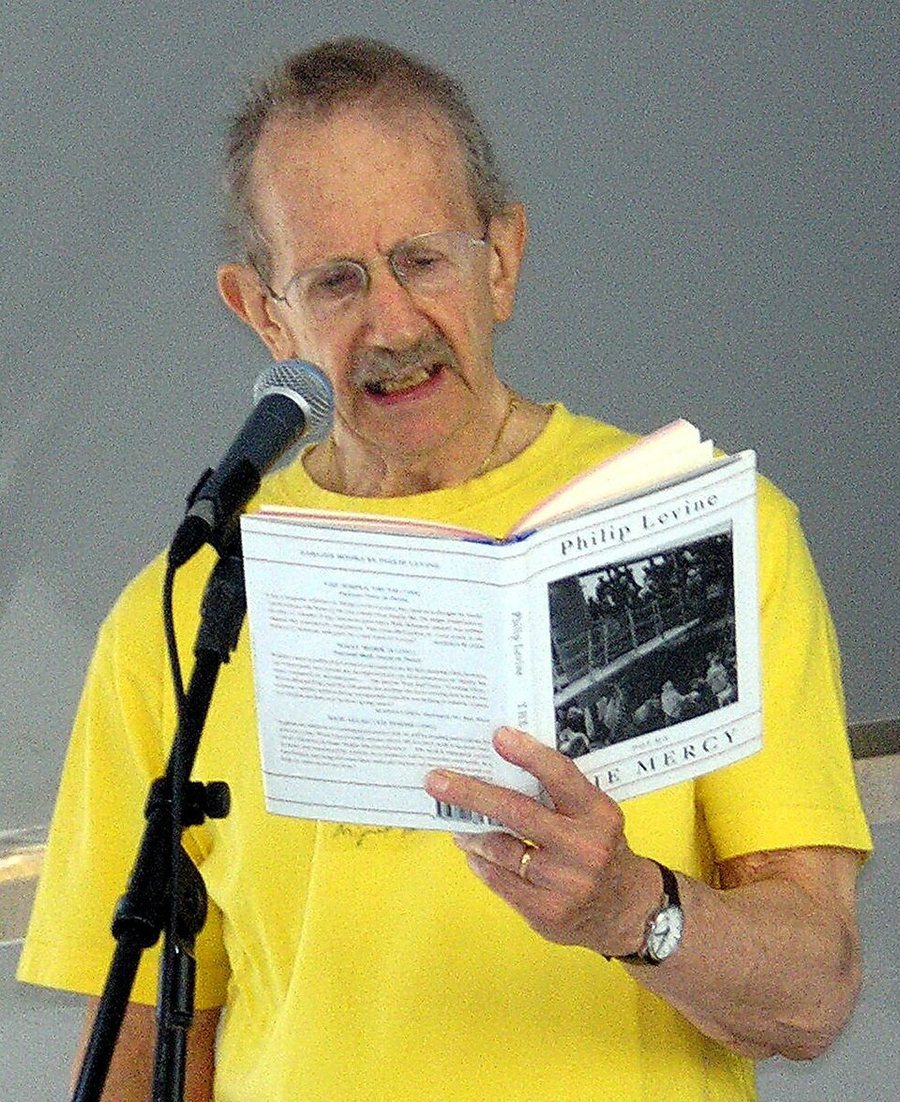
Philip Levine
1928–2015 · poet, essayist, professor
U.S. Poet Laureate (2011–2012) and Pulitzer winner whose poems about Detroit's factories and working people made him the city's great industrial poet.
- Born
Detroit, Michigan- Died
Fresno, California
aged 87- Detroit years
- 1928–early 1950s
- Field
- Literature
01 / The Detroit story
The Detroit story
Levine was born in Detroit to Jewish immigrant parents and grew up in the industrial city of the Depression and war years. He graduated from Central High School in 1946 and studied at Wayne University, where he began writing poetry. To support himself he took what he called 'stupid jobs' in the auto plants, including a stint at Detroit Transmission, a Cadillac branch, and the night shift at the Chevrolet Gear & Axle plant, a job he said he hated more than any other. Those years became the core of his poetry: the grease, noise, fatigue and dignity of Detroit's workers, the Spanish Civil War heroes of his youth, and family memory. He left for the Iowa Writers' Workshop in the 1950s and taught for three decades at Fresno State, but Detroit remained his subject to the end.
Highlights
- U.S. Poet Laureate, 2011–2012
- Pulitzer Prize for Poetry (1995) for The Simple Truth
- National Book Awards for Ashes (1980) and What Work Is (1991)
- Worked the night shift at Chevrolet Gear & Axle, subject of his early poems
- Graduate of Detroit Central High School (1946) and Wayne University
02 / Their Detroit places
Their Detroit places 3
Where they lived, worked, performed and liked to hang out. Closed and demolished places stay here too, because they are part of the city's history.
Studied here · 1940s–1946
Detroit Central High School
Detroit's oldest public high school, in its Tuxedo Street building since 1926; Levine graduated here in 1946.
Studied here · 1946–1950s
Wayne State University (then Wayne University)
Where he began writing poetry, encouraged by his mother.
Worked here · early 1950s
Chevrolet Gear & Axle plant
Closed
He worked the night shift here; the plant inspired his poem An Abandoned Factory, Detroit. American Axle bought it in 1994 and later shut it down.