City history / Civil rights & activism
Lisette Denison Forth
1786–1866 · formerly enslaved landowner and philanthropist
Born enslaved near Detroit, she won her freedom, became one of the region's first Black property owners and left her savings to build a church on Grosse Ile.
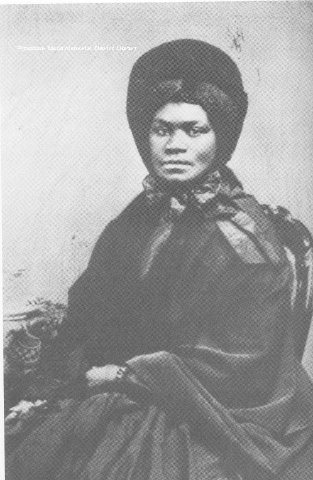
- Born
near Detroit, Michigan- Died
Detroit, Michigan- Birth name
- Elizabeth Denison
- Also known as
- Elizabeth Denison Forth
- Detroit years
- 1786–1866
01 / The Detroit story
The Detroit story
Elizabeth Denison, known as Lisette, was born into slavery near Detroit around 1786, one of six children of Peter and Hannah Denison. In 1807 her parents sued for the children's freedom before Judge Augustus Woodward's territorial court, which ruled that only children born after the Northwest Ordinance could go free; Lisette was not among them. Around 1807 she and her brother crossed into Canada, and they returned to Detroit about 1815 as free people. Working as a domestic servant, she saved carefully: in 1825 she bought four lots in Pontiac, becoming its first Black property owner, and she later invested in steamboat and bank stock and a Detroit lot. For many years she worked for the family of John Biddle, living at their Wyandotte estate and in Philadelphia, before returning to her own home on Macomb Street. She died in 1866 and was buried in Elmwood Cemetery. Her bequest paid for St. James Episcopal Church on Grosse Ile, whose red doors are dedicated to her.
Highlights
- Her family's 1807 freedom suit is a landmark case of Michigan slavery
- First Black property owner in Pontiac, Michigan (1825)
- Invested in land, steamboat and bank shares while working as a maid
- Her bequest built St. James Episcopal Church, Grosse Ile (1867)
02 / Their Detroit places
Their Detroit places 4
Where they lived, worked, performed and liked to hang out. Closed and demolished places stay here too, because they are part of the city's history.
Memorial · 1867–
St. James Episcopal Church
Church built with her bequest; its red doors are dedicated to her and a state historical marker on the site tells her story.
Buried here · 1866–
Elmwood Cemetery
Detroit's historic cemetery, where she was buried in 1866.
Lived here · 1854–1866
Lisette Denison Forth home site
Status being checked
Site of the house she owned in her last years, designated a State of Michigan Historic Site.
Memorial · 1825
Oak Hill Cemetery, Pontiac
Her 1825 Pontiac lots now form part of this cemetery, where a state historical marker commemorates Pontiac's first Black landowner.