Music
John Lee Hooker
1917–2001 · blues singer, songwriter, guitarist
Delta-born bluesman who built his electric boogie sound in Detroit's Hastings Street clubs and cut the 1948 hit "Boogie Chillen'" in a Detroit studio.
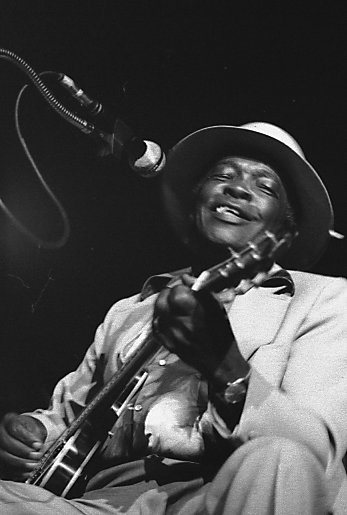
- Born
Mississippi Delta (near Tutwiler), Mississippi- Died
Los Altos, California
aged 83- Also known as
- The Hook · King of the Boogie
- Detroit years
- 1943–1970
- Field
- Music
01 / The Detroit story
The Detroit story
Hooker left the Mississippi Delta as a teenager and, after years in Memphis and Cincinnati, settled in Detroit in 1943, drawn by wartime factory work. He took a job at Ford and later worked as a janitor in a steel mill, while at night he played house parties and the bars of Hastings Street, the main artery of Black Bottom and Paradise Valley. To be heard over the crowds he switched to an electric guitar. In September 1948 record distributor Bernard Besman recorded him at United Sound Systems on Second Avenue; the song, "Boogie Chillen'," names Hastings Street and Henry's Swing Club and went to number one on the national race-records chart in early 1949. Through the 1950s he recorded for many labels, often under pseudonyms, including sessions for Joe Von Battle, whose record shop stood on Hastings. His one-chord, foot-stomping boogie became the signature sound of Detroit blues. He moved to California around 1970.
Highlights
- "Boogie Chillen'" (1948), recorded at United Sound Systems, topped the R&B chart in 1949
- Other classics: "Crawling King Snake", "Dimples", "Boom Boom" (1962)
- Inducted into the Blues Hall of Fame (1980) and the Rock and Roll Hall of Fame (1991)
- Won Grammys late in life for The Healer, Chill Out and Don't Look Back
- "Boogie Chillen'" joined the National Recording Registry in 2008
02 / Their Detroit places
Their Detroit places 4
Where they lived, worked, performed and liked to hang out. Closed and demolished places stay here too, because they are part of the city's history.
Performed here · 1943–1950s
Hastings Street (Black Bottom / Paradise Valley)
Demolished · 1960
The Black Bottom and Paradise Valley street of bars and clubs where Hooker played after his factory shifts; it was razed for the Chrysler Freeway around 1960.
Performed here · 1940s
Henry's Swing Club
Demolished
Hastings Street club named in the opening lines of "Boogie Chillen'"; it disappeared with the rest of the street when the freeway was built.
Recorded here · 1948
United Sound Systems Recording Studios
The Second Avenue studio where Bernard Besman recorded "Boogie Chillen'" in September 1948; the building is a city historic district and still a working studio.
Recorded here · late 1940s–1950s
Joe's Record Shop (Hastings Street)
Demolished · 1945–1960
Joe Von Battle's record shop and back-room studio on Hastings Street, where Hooker recorded and was famously photographed with his guitar.