Science & invention
John Harsanyi
1920–2000 · economist, game theorist
Budapest-born Nobel laureate in economics and a founder of modern game theory, who taught at Wayne State University in Detroit from 1961 to 1963.
- Born
Budapest, Hungary- Died
Berkeley, California
aged 80- Birth name
- Harsányi János Károly
- Also known as
- Harsányi János
- Detroit years
- 1961–1963
- Field
- Science & invention
01 / The Detroit story
The Detroit story
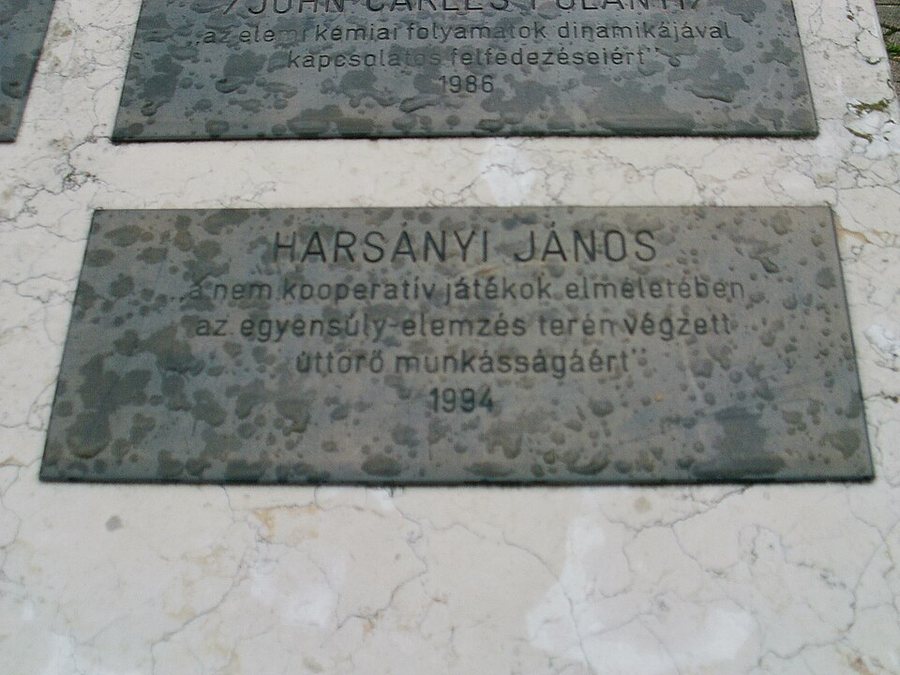
Harsanyi grew up in Budapest and first trained as a pharmacist. In 1944 he escaped from a wartime forced-labor unit, and in 1950 he left Hungary for good, settling in Australia. After fellowship years at Stanford he went back to Australia, and in 1961, with backing from the economists Kenneth Arrow and James Tobin, he took a professorship of economics at Wayne State University in Detroit. The two Detroit years gave him a firm footing in American academic life; in 1964 he moved to the University of California, Berkeley, where he stayed for the rest of his career. His models of games in which players lack full information about each other, now called Bayesian games, changed how economists analyze strategy. In 1994 he shared the Nobel Memorial Prize in Economic Sciences with John Nash and Reinhard Selten.
Highlights
- Nobel Memorial Prize in Economic Sciences, 1994, with John Nash and Reinhard Selten
- Professor of economics at Wayne State University, 1961–1963
- Founded the theory of games with incomplete information (Bayesian games)
- Counted among 'the Martians', the celebrated Hungarian-born scientists
02 / Their Detroit places
Their Detroit places 1
Where they lived, worked, performed and liked to hang out. Closed and demolished places stay here too, because they are part of the city's history.
Worked here · 1961–1963
Wayne State University (then Wayne University)
His first American professorship: he taught economics here for two years before moving to Berkeley.